


What This Page Covers
- Legal vs. Physical Custody: Differentiating between the legal right to make major upbringing decisions (education, healthcare) and where the child primarily resides.
- Modifications and Enforcement: Legal procedures for altering existing custody, parenting time, or child support orders when family dynamics or financial realities shift.
- DCS and CHINS Representation: Specialized defense and navigation for parents facing Department of Child Services investigations or Child in Need of Services actions.
- Paternity and Relocation: Legal frameworks for establishing biological fatherhood rights and managing disputes when a custodial parent intends to move.
- Extended Family Petitions: Guidance for grandparents and other relative figures seeking formal custody or court-ordered visitation rights.
Why This Matters
- Best Interests Realization: Ensuring that all structural and scheduling agreements align perfectly with the child’s safety, stability, and emotional health.
- Conflict De-escalation: Utilizing alternative dispute methods to resolve sensitive issues before they escalate into exhausting, adversarial court battles.
- Protecting Parental Rights: Guaranteeing that both maternal and paternal relationships are legally safeguarded during a split or divorce.
- Intervention Defense: Shielding families from the high stress and potential mistakes associated with navigating state-level child welfare investigations alone.
- Establishing Structure: Creating clear, court-approved boundaries that minimize future miscommunication and ensure financial support compliance.
Key Actions You Can Take
- Request a Case Consultation: Speak with an Indianapolis family law attorney to assess your custody rights and map out an optimization strategy.
- Pursue Mediation Services: Enter structured negotiations to reach a mutual parenting agreement outside of a formal courtroom setting.
- Execute a Child Support Worksheet: Utilize state-mandated guidelines and financial inputs to calculate or recalculate accurate support obligations.
- Petition for a Modification: File formal paperwork with the local court if a substantial change—like a new job or relocation—disrupts your current schedule.
- Prepare for Litigation: Secure a dedicated advocate to gather evidence, authenticate communications, and represent your interests if a trial becomes necessary.
Child Custody Attorneys in Indianapolis
Advocates For Your Children And Your Parental Rights
 Going through a divorce or separation is challenging enough, but these matters can be even more challenging and stressful to navigate when children are involved. It’s understandable that, as a parent, you only want what is best for your child, but this can often lead to emotional disputes that can easily escalate. At Zentz Law, we are passionate adoption lawyers. We provide compassionate guidance and clear advice to work closely with you and the other party reach a reasonable child custody agreement. Our child custody lawyers are devoted to helping families navigate these complex conflicts to ensure the best outcome in a positive and productive manner. Our experienced team can provide mediation, negotiation, and litigation services tailored to your individual situation. Let’s discuss your custody concerns: Start with a consultation at our Indianapolis office. Call today at 317-220-6056.
Child Custody Law Definition in Indiana
The purpose of laws concerning child custody in Indiana is to ensure the best decision is made concerning parental rights and the best interests of the child. Indiana courts prefer that parents work child custody matters out between themselves. However, when that is not possible, a judge will get involved to resolve the issue in a custody trial. It’s not uncommon for both parents in these situations to have disputes and disagreements, which is why it’s often necessary to work with a child custody lawyer who can defend your rights if the case goes to trial. A child custody lawyer can also help both parties reach an agreement to avoid the case going to court.
What is the Difference Between Legal and Physical Custody?
When you are preparing for a child custody case in Indiana, it’s helpful to understand the basic principles involved in these types of cases. Child custody is essentially made up of two elements: legal custody and physical custody.
Legal Custody
Legal custody refers to a parent’s legal right to make decisions regarding the child’s upbringing, such as medical treatments, education, and religious beliefs. If a parent is granted sole legal custody, they do not have to consult the other parent before making any decisions concerning the child. With joint custody, both parents have the right to be involved in the decisions made and one parent cannot make decisions without the other’s consent.
Physical Custody
 Physical custody refers to where the child primarily lives. In Indiana, this is referred to as the custodial parent’s residence. The custodial parent is granted primary physical custody and the non-custodial parent is granted parenting time as Indiana emphasizes the importance of both parents getting to spend time with their child. Indiana would prefer that both parents work together to raise a child, even if separated. However, sole physical custody could be granted if necessary. Sole physical custody is usually granted if one parent is unable to provide proper care for the child due to housing instability, substance abuse, neglect, abuse, or mental health issues. If shared physical custody is granted, the child will split their time between both parents.
What Makes a Parent Unfit?
An unfit parent is someone who is unable to provide proper guidance, care, and support for a child. Factors that can play a role in determining whether a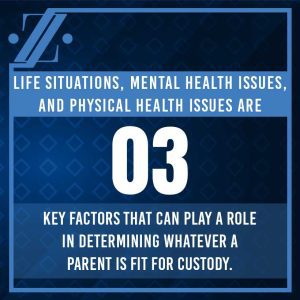 parent is fit for custody can include:
- Life situations: This can include not having the income to care for or support a child or not having stable housing. This can also include lifestyle choices or patterns of behavior that could negatively affect the child, such as anger issues, problems with substance abuse, gambling addictions, and generally being incapable of making good decisions.
- Mental health issues: If a parent has serious mental health issues that could affect their ability to provide support and make good decisions, this could also contribute to them being deemed an unfit parent. Certain mental health issues, for example, could make a parent a danger to both themselves and the child.
- Physical health issues: If the parent has a severe physical health condition, this could also lower their chances of being awarded custody. If a parent is seriously ill and bedridden or disabled, for example, the court could see this as meaning they would not be able to adequately support and care for the child.

The Child Custody Case Process in Indiana
When a divorce or separation is filed, the court will note if there are any minor children listed on the documents filed. If so, the court will be on notice that the divorce must address the issue of child custody and parenting time. If both parents can reach an agreement without getting the court involved, they can simply submit the child custody agreement for the court to review and approve. If both parents don’t agree, however, it is wise to engage the counsel of an experienced Indiana child custody attorney. A attorney can help with mediation and negotiations, which could help both parties reach an agreement without the issue turning into a legal custody battle. However, if the conflicts cannot be resolved, the case will go to court. If this happens, the court will likely require the parents and even the child to be evaluated by third parties to determine whether they are fit to parent and have custody. It is also important to work with child custody lawyers at this stage as they can handle litigation, protect your rights, and help you better understand what to expect during the custody dispute and how best to move forward. When making custody decisions, the court will consider various factors, including:
- The age and sex of the child.
- The wishes of the child’s parent or parents.
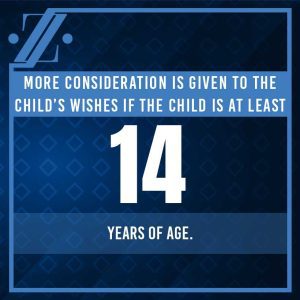
- The wishes of the child, with more consideration given to the child’s wishes if the child is at least fourteen (14) years of age.

- The interaction and interrelationship of the child with the child’s parent or parents, the child’s sibling, and any other person who may significantly affect the child’s best interests.
- The child’s adjustment to the child’s home, school, and community.
- The mental and physical health of all individuals involved.
- Evidence of a pattern of domestic or family violence by either parent.
Child Custody Modification
Child custody agreements can be changed. If circumstances change after legal and physical custody have been decided, a parent may request a modification or change order, but it must be approved by the court. The court can only modify a child custody order if the modification is in the best interest of the child(ren) and there is a substantial change in one or more of the factors the court may consider in making an initial custody determination. If the changes desired pertain to child support payments, the arrangement can only be modified if making payments is no longer reasonable or financially feasible for the parent. Child support payment agreements can also be modified after one year if the amount of support ordered to be paid differs by more than 20% from the amount specified in child support guidelines. It’s worth noting, however, that if both parents are in agreement, they are to modify child support obligations. This can be done by completing the child support obligation worksheet. If both parties cannot agree, then they may then seek a modification by filing a petition with the court. If you need help with child support or child custody modification, child custody lawyers can help. They can offer you guidance and help walk you through the process to ensure the best possible outcome.
Zentz Law – Child Custody Attorneys in Indianapolis
Our child custody attorneys at Zentz Law are well-versed in all aspects of child custody and can help with a range of situations, including:
- Department of Child Services cases (helping parents regain custody after DCS removal)
- CHINS interventions (Child in Need of Services) for abuse or neglect
- Petitions for custody by grandparents or other extended family
- Paternity actions for child support or visitation rights
- Parent relocation (moving the kids away from Indiana)
- Enforcement of child support or visitation orders
- Modification of child support
- Modification of custody orders or parenting plans
 Although our lawyers deal with these issues every day, we know these are tense times for you and your kids. We strive to educate and support our clients throughout the process to alleviate their stress and help them make good decisions. We provide a initial consultation. Call our Indianapolis law office at 317-220-6056 to schedule a time or use our online form to tell us about your situation. Ask about our flexible payment plans to ensure you have timely access to the quality legal representation you need. ***Please note: This page is not intended to give specific legal advice but is meant for information purposes only. Contact us to discuss your case***
Common Questions About Child Custody & Support In Indiana
How far can a parent move with a child after a custody order is entered in Indiana?
Under the Indiana Relocation Statute, there is no specific mileage threshold that exempts a parent from notifying the court. A parent must file a formal notice of intent to relocate for any move that changes the child’s principal residence, even if it is just down the street. The non-relocating parent then has a strict statutory window to object if they believe the move will harm parenting time or disrupt the child’s best interests.
Can a child choose which parent to live with in Indiana?
A child cannot outright choose which parent to live with at any age in Indiana. However, state law requires a judge to consider the child’s wishes as one of several factors, placing significantly more weight on those preferences if the child is at least 14 years old. Ultimately, the court retains final authority and will make the placement decision based entirely on the child’s overall best interests.
What happens if one parent repeatedly violates a parenting time schedule?
If a parent consistently denies or interferes with a court-ordered parenting schedule, the aggrieved parent can file a petition for contempt of court to enforce compliance. An Indiana judge can penalize the violating parent by ordering make-up parenting time, civil fines, or the payment of the other party’s attorney fees. Furthermore, a persistent pattern of non-compliance can be viewed as a substantial change in circumstances, potentially justifying a permanent modification of custody.
How do Indiana courts handle custody when parents live in different states?
Interstate child custody cases are strictly governed by the Uniform Child Custody Jurisdiction and Enforcement Act (UCCJEA), which Indiana has adopted. Under this law, initial custody determinations must be made in the child’s official “home state,” which is defined as the state where the child lived with a parent for at least six consecutive months prior to the filing. Once a state establishes jurisdiction, it generally retains exclusive control over any future modifications unless all parties leave that state.
Can text messages, emails, and social media posts be used as evidence in a child custody case?
Yes, digital evidence such as text messages, emails, and social media posts are highly admissible in Indiana custody hearings as long as they can be properly authenticated. Judges frequently review these digital records to evaluate parental fitness, assess how well the parents communicate, and look for evidence of volatile behavior or parental alienation. It is critical for parents to maintain a professional, calm demeanor in all digital communications during a pending dispute.
What rights do fathers have in Indiana child custody disputes?
Indiana law is explicitly gender-neutral, meaning mothers and fathers enter a custody dispute on an equal legal playing field with no automatic presumption favoring either parent. However, for unmarried fathers to assert these equal rights to legal custody, physical custody, or parenting time, they must first legally establish paternity. This can be accomplished either by executing a joint Paternity Affidavit at birth or by filing a paternity action through the local court system.
How does a parent’s work schedule affect child custody decisions in Indiana?
A parent’s work schedule is a major factor considered by Indiana courts because it directly influences a parent’s physical availability to provide day-to-day care and maintain a stable routine. While demanding or irregular hours do not automatically disqualify a parent, judges look closely at who will actually be raising the child during those hours. If a parent’s schedule requires heavy reliance on third-party childcare or babysitters, the court may lean toward giving primary physical custody to the co-parent.
Can grandparents seek visitation rights if a parent denies access to a child?
Yes, under the Indiana Grandparent Visitation Act, grandparents can petition the court for standalone visitation rights under highly specific circumstances, such as if a parent is deceased, the marriage of the child’s parents has been dissolved, or the child was born out of wedlock. To succeed, the grandparents must present strong evidence to overcome a constitutional presumption that a fit parent’s decision to restrict access is in the child’s best interests.